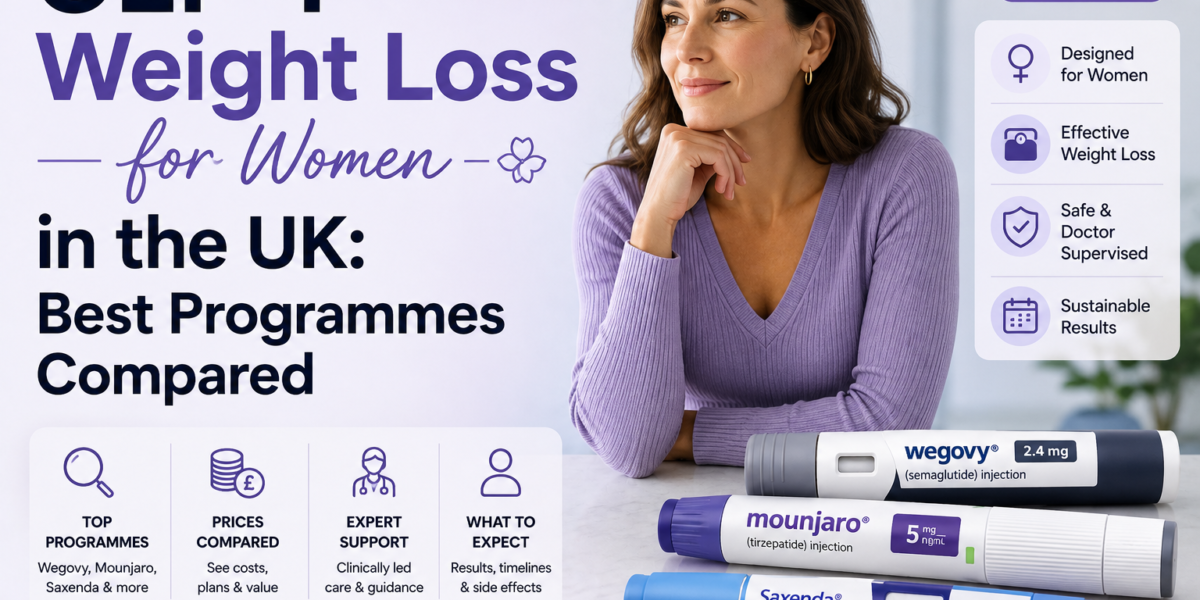
GLP-1 medications work for everyone — but the experience of being a woman on Ozempic, Wegovy, or Mounjaro is meaningfully different from the experience of being a man. Hormonal fluctuations affect how the medication works across your cycle. The side effects hit differently. The psychological relationship with food, body image, and weight that most women carry into treatment adds a layer of complexity that purely clinical programmes often fail to address.
And yet most of the major clinical trials that established the efficacy of these medications enrolled participants that skewed heavily male or failed to report results disaggregated by sex. The evidence base is strong, but the women-specific data is thinner than it should be.
This article covers everything women in the UK need to know about GLP-1 medications in 2026 — how they work specifically for women, what to expect hormonally, which UK programmes are built with women in mind, and how to set yourself up for the best possible results.
Do GLP-1 Medications Work Differently for Women?
The short answer is yes — though the research is still catching up with what many women on these medications report anecdotally.
Weight loss rates. Clinical trial data shows that women generally lose slightly less weight than men on the same GLP-1 medication at the same dose. In the STEP 1 trial for Wegovy, women achieved meaningful weight loss but the average was marginally lower than for male participants. This is consistent with broader patterns in weight loss research — women’s metabolism and hormonal environment create a different starting point.
Hormonal interactions. GLP-1 receptors are present in reproductive tissues, and there is emerging evidence that GLP-1 medications may interact with the hormonal environment across the menstrual cycle. Some women report that nausea and side effects are more pronounced in the luteal phase — the two weeks before their period when progesterone is dominant. This is not well-studied in clinical trials but is consistently reported by women on these medications.
PCOS. Polycystic ovary syndrome affects approximately one in ten women of reproductive age in the UK and is characterised by insulin resistance, elevated androgens, and difficulty losing weight. GLP-1 medications address insulin resistance directly — which is part of why early research suggests they may be particularly effective for women with PCOS. Some small studies have shown improvements not just in weight but in menstrual regularity and androgen levels in women with PCOS on semaglutide.
Perimenopause and menopause. Women in perimenopause and post-menopause often find that weight gain — particularly around the abdomen — becomes resistant to the diet and exercise approaches that worked earlier in life. This is partly hormonal: declining oestrogen changes how the body distributes and stores fat. GLP-1 medications work on appetite and metabolism in ways that are not oestrogen-dependent, making them potentially more effective than lifestyle interventions alone for this group.
Contraception. This is important and often missed. GLP-1 medications slow gastric emptying — which affects how quickly oral contraceptive pills are absorbed. Women taking the pill alongside GLP-1 medication should discuss this with their prescriber, as absorption may be reduced, particularly during the dose titration phase. Additional contraceptive precautions may be appropriate.
Fertility. GLP-1 medications are not recommended during pregnancy or when trying to conceive. They should be stopped at least two months before attempting pregnancy. If you are of childbearing age and starting GLP-1 treatment, discuss contraception and family planning with your prescriber.
Side Effects Women Experience Most
The standard GLP-1 side effects — nausea, diarrhoea, constipation, fatigue — affect men and women broadly similarly. But there are a few areas where women’s experience diverges:
Hair loss. Telogen effluvium — the diffuse hair shedding that can occur 3–6 months into GLP-1 treatment — is reported more frequently by women than men, partly because women are more likely to notice and report it and partly because women’s hair loss is more socially significant and distressing. It is driven by rapid weight loss and reduced calorie intake rather than the medication directly. Maintaining protein intake above 1.2g per kg of body weight daily and taking a multivitamin covering iron, zinc, and biotin significantly reduces the risk. Hair typically regrows within 6–12 months once weight stabilises.
Muscle loss. Women typically have a lower baseline muscle mass than men and a different hormonal environment affecting muscle protein synthesis. Muscle loss alongside fat loss is a real risk on GLP-1 medications — and for women, the consequences in terms of strength, metabolism, and long-term bone health are significant. Resistance training and adequate protein intake are not optional for women on GLP-1 medications — they are essential.
Nausea cyclical variation. As noted above, many women report that nausea is worse in the luteal phase. This is worth tracking — if you know nausea reliably spikes in the two weeks before your period, you can adjust your eating patterns, ensure you are on top of anti-nausea strategies, and avoid dose increases during this phase.
Body composition. Women may notice that GLP-1 medications change body composition in ways that feel unexpected. Significant fat loss from areas including the face, chest, and buttocks — sometimes described as Ozempic face or Ozempic butt — is more commonly discussed among women because these areas carry more cultural significance. These are consequences of rapid fat loss rather than direct drug effects, and slower titration reduces their severity.
Who Qualifies for GLP-1 Medication in the UK?
Eligibility criteria are the same for men and women in the UK. For private prescription through online clinics:
Most providers require a BMI of 30 or above, or a BMI of 27 or above with at least one weight-related health condition. Weight-related conditions that qualify typically include type 2 diabetes, hypertension, sleep apnoea, cardiovascular disease, PCOS, or non-alcoholic fatty liver disease.
For NHS access, the threshold is stricter — BMI of 35 or above with qualifying comorbidities, or BMI of 40 or above. NHS waiting lists in most areas are 12–18 months.
Best GLP-1 Programmes for Women in the UK 2026
Several UK providers have built specifically women-focused GLP-1 programmes that go beyond prescription-and-dispatch to address the full complexity of women’s weight management. Here is how they compare.
Juniper UK — Overall Best for Women
Juniper is the women’s weight management programme built by Eucalyptus — the Australian digital health company that has supported over 350,000 patients globally. Their Weight Reset Programme combines weekly GLP-1 medication with dietitian support, strength training guidance specifically designed to counter muscle loss, and an award-winning app that tracks progress and provides educational content throughout treatment.
What makes Juniper genuinely different from generic prescription services is the quality of their published clinical evidence. Their research — published in peer-reviewed journals — shows that combining GLP-1 medication with their structured support programme produces four times better outcomes than medication alone. This is not marketing language — it is documented in academic literature.
Their programme is explicitly built around the female experience of weight management: the hormonal complexity, the relationship with food and body image, the long-term sustainability challenges that most purely clinical approaches ignore. The dietitian and health coaching teams understand what women on GLP-1 medications are going through in a way that a GP prescribing service simply cannot replicate.
Medications: Wegovy, Mounjaro Regulation: UK-registered prescribers, GPhC-registered pharmacies Support: Dedicated app, dietitian access, health coaching, clinician check-ins Best for: Women who want comprehensive evidence-based support alongside medication
Delilah — Best for Emotional and Psychological Support
Delilah takes a different approach from Juniper. Where Juniper emphasises clinical and nutritional rigour, Delilah focuses on the emotional and psychological dimensions of women’s relationship with food, weight, and body image alongside the GLP-1 prescription.
Their programme recognises that for many women, weight is not purely a physiological issue. Years of dieting, restriction, and diet culture create psychological patterns that medication alone does not address. Delilah’s coaching model works alongside the medication to help women build a healthier long-term relationship with eating — one that is sustainable after treatment ends.
The recurring commission structure — rather than a one-off CPA — makes Delilah particularly valuable from an affiliate perspective. GLP-1 patients stay on treatment for months or years, meaning a single referral generates recurring income for as long as the patient remains a member.
Medications: GLP-1 weight loss programme Support: Emotional coaching, psychological support, community Best for: Women whose weight challenges have significant emotional or psychological dimensions Commission: Recurring percentage on all customer payments Apply: Through Rewardful
Levity UK — Best for Structured Clinical Programme
Levity operates in both the US and UK and offers Wegovy, Ozempic, and Mounjaro through a structured clinical programme that pairs medication with personalised weight management guidance. Their approach is evidence-based and clinically led — strong for women who want a medically rigorous programme rather than a wellness-focused one.
Levity is not explicitly women-focused — they serve both men and women — but the quality of their clinical programme makes them a strong choice for women who want the medical credibility of a GP-led approach alongside their medication.
Medications: Wegovy, Ozempic, Mounjaro Regulation: GPhC-registered, GMC/NMC prescribers Affiliate: Awin UK, merchant ID 106099 Best for: Women who want clinical rigour and structured medical support
eMed UK — Best for GP Access
eMed UK’s programme includes unlimited GP consultations — which matters particularly for women navigating the hormonal complexities of GLP-1 treatment. Questions about contraceptive interactions, cycle-related side effects, PCOS management, or perimenopausal symptoms alongside medication all benefit from having a GP available without additional charges.
The flat £100 affiliate commission per referral also makes eMed one of the most straightforward programmes to promote.
Medications: Wegovy, Mounjaro Support: Unlimited GP consultations, weekly progress tracking, side effect management Commission: £100 flat CPA Best for: Women who want ongoing GP access as questions arise
Nutrition: What Women on GLP-1 Medications Need to Prioritise
This section is important — and often overlooked by programmes that focus on the medication while underselling the nutrition piece.
Protein is the single most important nutrient. GLP-1 medications suppress appetite significantly — most women on Wegovy or Mounjaro eat 30–50% less than before. When calorie intake drops that dramatically, protein is the first casualty because women often reduce protein alongside everything else. The consequence is muscle loss, hair thinning, fatigue, and a slower metabolism that makes long-term weight maintenance harder.
Target 1.2–1.6g of protein per kg of body weight daily. For a 75kg woman that is 90–120g of protein per day — very difficult to achieve through food alone when eating much less than usual. A high-quality protein supplement is not a luxury on GLP-1 medication, it is a practical necessity for most women.
Iron deserves specific attention for women. Women of reproductive age already have higher iron requirements than men due to menstrual blood loss. Reduced food intake on GLP-1 medication can push iron intake below the threshold needed to prevent anaemia — which worsens fatigue and hair loss. A multivitamin that includes iron is important. If you are experiencing unusual fatigue, ask your GP to check your ferritin levels.
Calcium and vitamin D matter more during weight loss. Rapid fat loss is associated with reduced bone density. Women — particularly perimenopausal and post-menopausal women — are at higher baseline risk of osteoporosis. Supplementing calcium alongside vitamin D while on GLP-1 medication is a sensible precaution.
Electrolytes prevent the headaches and fatigue most women attribute to the medication. Nausea and reduced food intake both lead to electrolyte loss. Low sodium, potassium, and magnesium cause the headaches, muscle cramps, and brain fog that many women on GLP-1 medications experience. An electrolyte supplement — or simply ensuring you are getting adequate salt, potassium-rich foods, and magnesium — makes a meaningful difference to how you feel day to day.
See our full Supplements Guide for a complete breakdown of what to take, at what dose, and why.
GLP-1 and PCOS: A Special Case
Polycystic ovary syndrome is one of the most compelling indications for GLP-1 medication in women, even though it is not yet an FDA or MHRA-approved indication for either semaglutide or tirzepatide.
The mechanism makes sense. PCOS is characterised by insulin resistance — the body’s cells do not respond efficiently to insulin, leading to elevated insulin levels that drive androgen production, disrupt ovulation, and make weight loss extremely difficult. GLP-1 medications directly improve insulin sensitivity, which addresses one of the core hormonal drivers of PCOS.
Early research is promising. Small studies have shown improvements in menstrual regularity, reductions in androgen levels, and meaningful weight loss in women with PCOS on semaglutide. The weight loss itself also reduces insulin resistance independently, creating a reinforcing positive cycle.
If you have PCOS and are considering GLP-1 medication, this is a conversation worth having with both your GP and your gynaecologist or endocrinologist. The combination of weight loss, improved insulin sensitivity, and potential hormonal normalisation makes these medications particularly relevant for PCOS — but they should be used as part of a comprehensive management plan, not in isolation.
GLP-1 in Perimenopause and Menopause
This is an area of rapidly growing interest — and for good reason. The hormonal shifts of perimenopause and menopause change fat distribution, slow metabolism, and make weight management far more difficult than it was in earlier decades. Many women in their 40s and 50s find that the approaches that worked before suddenly stop working — not because they are doing anything differently but because their hormonal environment has fundamentally changed.
GLP-1 medications work through appetite and metabolic pathways that are not oestrogen-dependent. This means they can be effective for women in perimenopause and menopause even when diet and exercise alone are not producing results.
There is also emerging research on the intersection of GLP-1 medications and HRT (hormone replacement therapy). Some early evidence suggests that the combination of GLP-1 medication with HRT may produce better outcomes than either alone for perimenopausal women — addressing both the hormonal drivers of menopausal weight gain and the appetite and metabolic factors that GLP-1 medications target. This is an active area of research, not yet established clinical practice, but worth discussing with a menopause specialist.
Practical Tips for Women Starting GLP-1 Treatment in the UK
Track your cycle alongside your medication. Note when nausea and side effects are worst in relation to your cycle. If they cluster in the luteal phase, you can plan around them — adjust eating patterns, stock up on ginger tea, and avoid scheduling dose increases in that window.
Tell your prescriber about all medications including contraception. Oral contraceptives may be less reliably absorbed during GLP-1 treatment due to slowed gastric emptying. Your prescriber needs to know what you are taking to advise appropriately.
Start a resistance training routine before you start the medication if possible. Building muscle is harder than maintaining it. If you begin strength training before GLP-1 medication reduces your appetite and energy, you give your muscles a head start. Bodyweight exercises, resistance bands, or weights all work — the goal is progressive overload two to three times per week.
Do not skip the protein. If you remember nothing else from this article, remember this. Protein is what protects your muscle while you are losing fat. Without adequate protein, a significant proportion of your weight loss will come from muscle rather than fat — leaving you lighter but not stronger, with a slower metabolism and a higher risk of regaining weight when treatment ends.
Choose a programme with women-specific support. The difference between a programme that understands the female experience of weight management and one that does not is significant. Juniper UK, Delilah, and eMed UK’s GP access all offer something that a generic prescription service does not.
Frequently Asked Questions
Do GLP-1 medications affect fertility? GLP-1 medications are not recommended during pregnancy or when actively trying to conceive. They should be stopped at least two months before attempting pregnancy. Interestingly, weight loss itself — achieved through any means — can improve fertility in women with PCOS or obesity-related hormonal disruption. Discuss your family planning intentions with your prescriber before starting treatment.
Can I take GLP-1 medication while on the pill? You should discuss this with your prescriber. GLP-1 medications slow gastric emptying, which may reduce the absorption rate of oral contraceptive pills. Some prescribers recommend additional contraceptive precautions during the dose titration phase. This is particularly relevant if your pill relies on consistent absorption timing.
Will GLP-1 medication affect my periods? Some women report changes to their menstrual cycle, particularly during the initial weeks of treatment. Significant weight loss itself can cause changes to cycle regularity — weight reduction affects oestrogen production and the hypothalamic-pituitary-ovarian axis. If you experience significant changes to your cycle, discuss with your GP.
Is GLP-1 medication safe during perimenopause? There is no specific contraindication for perimenopausal women. The medications have been used safely in women across age groups in clinical trials. If you are also on HRT, inform your prescriber so they can consider any interactions and monitor appropriately.
Which GLP-1 medication is best for women? Clinical trial data does not show a meaningful difference in how men versus women respond to semaglutide versus tirzepatide — tirzepatide produces stronger weight loss in both sexes. The choice between Wegovy and Mounjaro for women follows the same principles as for anyone: Mounjaro produces more weight loss but costs more and has stronger side effects. Wegovy is a strong option with a slightly easier side effect profile and lower private cost. See our full Ozempic vs Mounjaro comparison for detail.
What is the best UK clinic for women specifically? Juniper UK is the strongest women-specific programme in terms of clinical evidence, support quality, and published outcomes. Delilah is the best option for women whose weight challenges have significant emotional or psychological dimensions. eMed UK offers the best GP access for ongoing clinical questions.